Quick Answer
Dogs don't come pre-programmed with behaviours - they have to learn them. The word for any cue can be whatever you want, as long as you teach it.
Here's something many people don't realise: dogs don't come pre-programmed. They aren't born knowing what "sit," "stay," or "come" means. They have to learn every single behaviour we want from them.
The Language Barrier
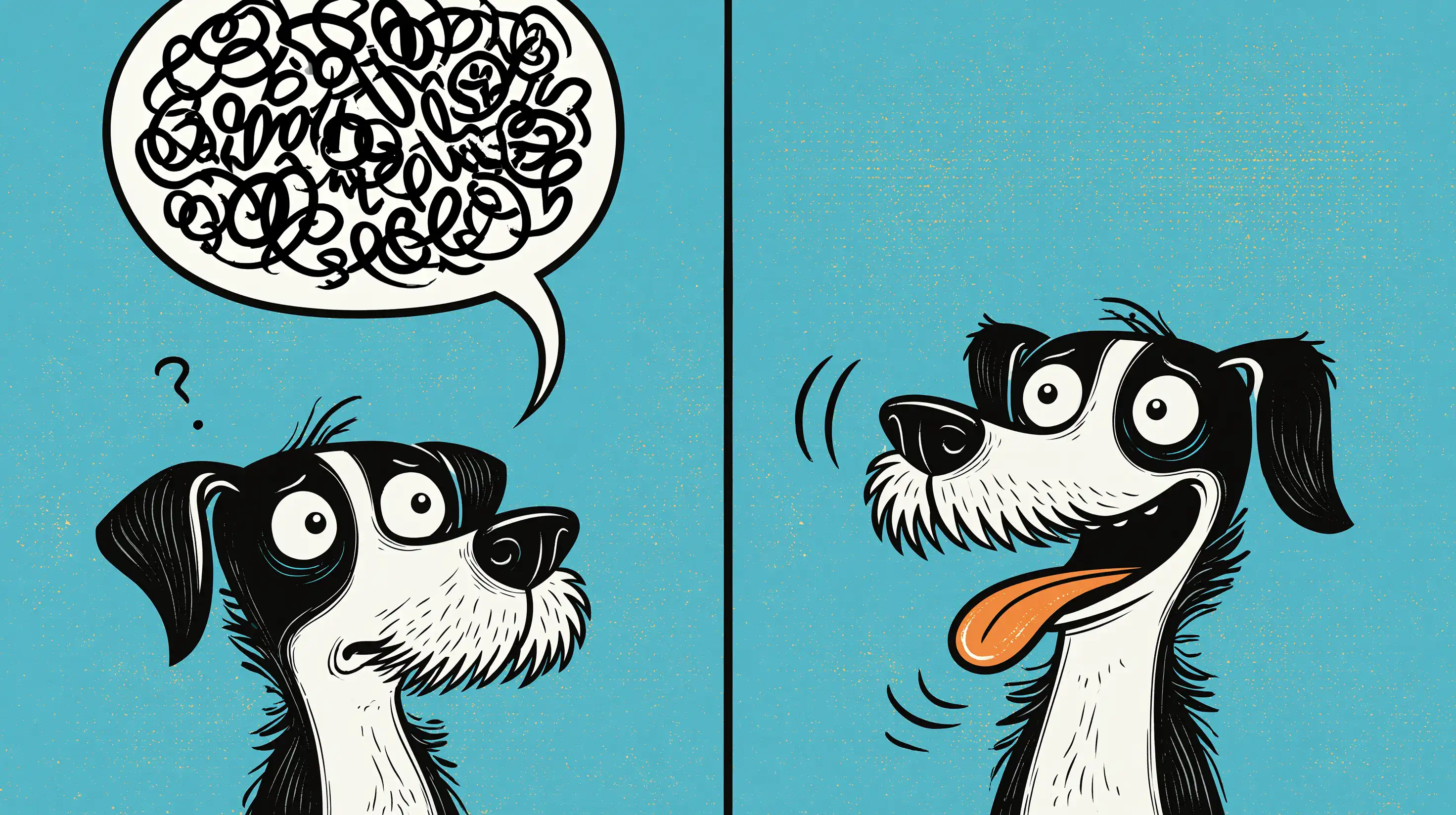
Think of it this way - imagine someone walked up to you and started shouting "Sientate! Sientate!" at you. If you don't speak Spanish, you'd have absolutely no idea they were asking you to sit down. You might look confused, walk away, or just stare at them blankly.
That's exactly how your dog feels when you use a cue word they haven't been taught yet.
Any Word Will Do
The brilliant thing about dog training is that the word you use for any cue can be whatever you want. You could teach your dog to sit using the word "banana" if you wanted to - as long as you teach the association consistently.
Give Your Dog Enough Information
The key to successful cue training is giving your dog enough information to understand what you're asking. This means:
- Lure the behaviour first so your dog understands what position you want
- Mark the moment they get it right with a clear marker word or clicker
- Reward immediately so they know that behaviour pays off
- Repeat consistently until the association is strong
Only then should you add the verbal cue word. If you add the word too early, before the dog understands the behaviour, you'll just be adding confusion.
Remember: patience and consistency are your best tools. Your dog wants to learn - you just need to give them the right information!
Laura McHugh, Constructive Canines
PITC Expert